
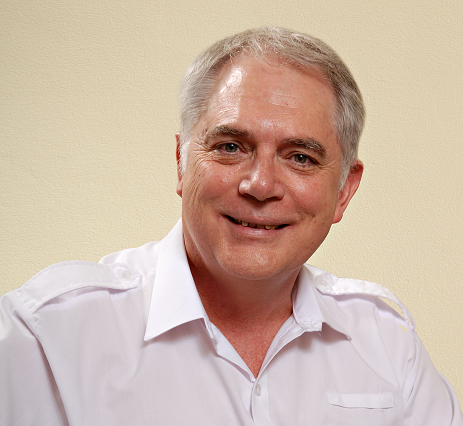
 Francois Anderson obtained a BSc degree in Electrical Engineering (cum laude) at the University of Pretoria, RSA in 1975 and a Master of Science degree in Electronic Engineering (cum laude) at the Georgia Institute of Technology, USA, majoring in Signal Processing, Communication and Radar in 1979. He also successfully completed the Executive National Security Programme at the SA National Defence College in 2000. He started work at the CSIR in January 1976 and is still employed in the CSIR Unit for Defence, Peace, Safety and Security as a Chief Radar and EW Systems Engineer. He also serves as a CSIR Fellow. His role is to provide technical leadership to research and development teams in the field of radar technology and applications, to perform technology fore-sighting, help define strategic direction and provide planning and contracting inputs in areas of science and technology of relevance to defence, peace, safety and security applications in Africa. In addition to his long standing interest in radar systems, their applications, their protection against electronic countermeasures and the physics and technology that make them work, his current focus is on persistent, wide area surveillance systems and sensors for border zone safeguarding missions and other Operations-Other-Than-War under Southern African environmental conditions. Mr. Anderson is a member of the SA Institute for Electrical Engineers (SAIEE) and is registered by the Engineering Council of South Africa (ECSA). He has also been elected as a Fellow of the South African Academy of Engineering (FSAEE).
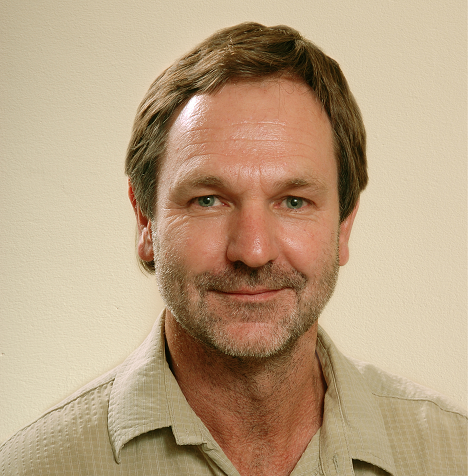 Christo Cloete is a principle researcher and RF Electronic Warfare (EW) systems engineer at the CSIR, with 28 years of EW experience gained from active service in the South African Air Force, working in the defence industry and research institutes. He is also the vice president of the South African chapter of the international EW organization, the Association of Old Crows (AOC), the Aardvark Roost.
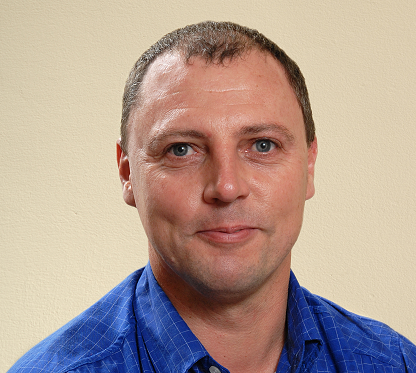 Pieter de Koker received his B.Eng (Mechanical) degree in 1993, and his Masters in 1996, both from the Rand Afrikaans University. He obtained a Masters of Business Administration from University of Pretoria in 2003. Pieter joined Armscor in 1996 as part of the Motorised Infantry and Engineering division. He was involved in Landmine protection technology from 1997 and was project manager for the compilation of the RSA-MIL-STD and handbook for mine protection. He joined the CSIR in 2003 as part of the landmine protection research team. Pieter is currently the Research Group Leader for Demonstrator Development at the Landwards Sciences group, which is responsible for the development of all landwards concepts and technology demonstrators in the fields of protection, firepower, soldier systems and mobility.
 Danie de Villiers is currently employed as a Principal Research Engineer at DPSS, a unit of the CSIR in Pretoria. He holds a M. Eng degree from North West University, and is currently working at the landwards sciences competency area within DPSS, mainly focussing on technology investigation, integration and decision support for the land base soldier. His current projects are: 1) Understanding new generation battery technologies and the dynamic characteristics of the soldier’s power supply requirements. 2) Robotic and sensor technology requirements to support the modern soldier. Which currently involves motion sensors and the Android operating system? Danie is a regular contributor to conferences, and has recently presented the following papers at the Land Warfare conference: 1) Extending the life of tactical radios by using smart batteries (2010). 2) Improved mortar setup technique (2008). Danie was also the key inventor and patent holder for the “Advanced Prismatic Mirror Reference Method For Mortars”. ( PCT Patent Application No. CT/IB2008/051163)
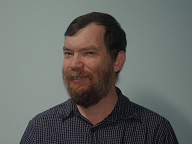 Pieter Schalk Els (Schalk) worked in industry, developing and testing military wheeled vehicles for 5 years. He was actively involved in many of the new technology projects developed by the company as well as applied research. Highlights include semi-active dampers for heavy vehicles (6 ton axle loads) as well as the world’s first semi-active hydraulic rotary damper for a heavy vehicle. In 1999 he joined the Department of Mechanical and Aeronautical Engineering at the University of Pretoria as a permanent staff member and obtained a PhD from the University of Pretoria in 2006. His current research effort is focussed on the use of semi-active dampers, combined with semi-active springs and ride height adjustment to improve ride comfort, handling, rollover propensity and life of off-road and heavy vehicles. This includes tyre, terrain profile and suspension component characterisation and modelling. Schalk published 23 peer-reviewed journal papers, 29 conference papers and produced 4 patents.
 WO1 A.E. Foxley is a weapons analyst with Chief of the South African Defence Force Staff. In 1990 completed his senior supervisor’s course at the Air Force College in Pretoria and obtained a Certificate in Explosives Technology for Supervision and Management at the University of South Africa in 2009. During his career he has conducted research on various topics, including foreign armour and infantry systems, ground and air defence artillery and unmanned aerial systems (UASs), eventually focussing on UASs and ammunition-related subjects. Besides his current tasking, he also serves as an advisor on the Department of Trade and Industry’s Non-Proliferation Control Committee on aspects such as munitions, UAV and tactical ballistic missile technologies.
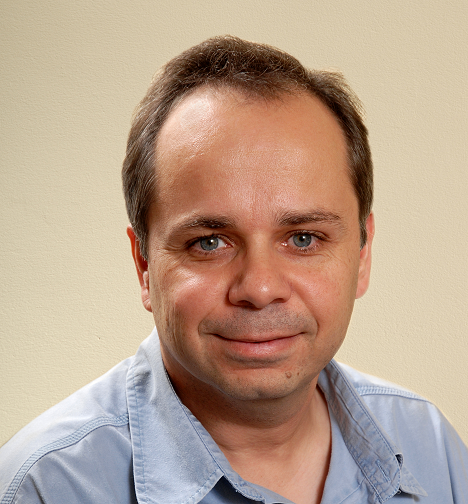 Duarte Gonçalves holds a B. Eng in Electronics and a M. Eng in Computer Engineering, and is currently employed by the CSIR where he is developing systems engineering skills. He has been involved in engineering surveillance systems for the South African Department of Defence and has consulted to the Karoo Array Telescope project as a systems engineer. He has also worked as systems engineer on a renewable energy project. At the CSIR, his most recent involvement was in Force Planning and Design. Interests include systems and enterprise engineering.
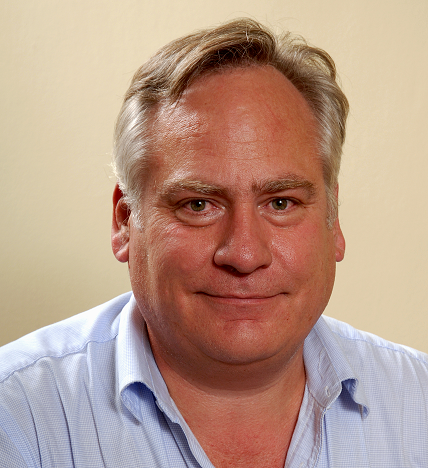 Braam Greeff is currently employed as a Principal Systems Engineer at Defense, Peace, Safety and Security (DPSS), a unit of the CSIR in Pretoria. He is currently serving as the Systems Engineer for a CSIR Flagship Safety and Security Project, focusing on solving some of the national safety and security problems. The project involves the development and integration of electro-optical-, radar- and landwards systems. Braam was also previously employed by Denel Land Systems, where he was involved for 23 years, in the development of combat turret- and vehicle systems, mainly for the SANDF and international clients. Specific specialization fields were vetronics- and fire control systems integrated into various systems, ranging from infantry-, armour and artillery products. Braam is currently the President-Elect for the International Council on Systems Engineering (RSA), and a regular contributing author of System Engineering articles to local and international conferences.
 Charl Harding (MSc Engineering Management) is a Principal Systems Engineer at the Council for Scientific and Industrial Research (CSIR) working in the Systems Integration Group (ISG) responsible for System of Systems Engineering. Charl has been a senior Systems Engineer in a range of large scale national and international projects. He is currently responsible for the Systems Engineering of the Static and Mobile Defence Communication Network for the South African Defence force.
 Stefan Kersop is a senior electronic design engineer in the TSO group of DPSS. He holds a B.Eng (Stellenbosch) and M.Eng (N.W. University). His mandate is to provide a wide variety of solutions for the SANDF’s technology needs, including design and development of prototypes and products in the form of running projects, advanced product research and field evaluations, systems integration for enhancing capabilities, field support, training of delivered systems, close in-filed customer interaction to understand their needs better, and operational support by providing quick reaction solutions. Stefan’s areas of expertise include rapid provision of field solutions for operational purposes and the development of a mini-UAS, including day/night camera payloads with associated video downlink.
 Louise Leenen is a Senior Researcher on the Command, Control and Information Warfare competency area in CSIR Defence, Peace, Safety and Security. She holds a PhD in Computer Science from the University of Wollongong in Australia and her application area is Artificial Intelligence (AI). Louise was awarded an Australian Postgraduate Award Industry grant to fund her studies in Australia. Louise joined the CSIR in 2007 and has been involved in projects where AI applications are required: ontology development, constraint programming and military path planning algorithms. She has co-authored a chapter on military path planning solutions in a book, Mobile Intelligent Autonomous Systems, to be published later this year. Before she joined the CSIR she was a lecturer in Computer Science and lectured at several universities in Australia and at the University of South Africa.
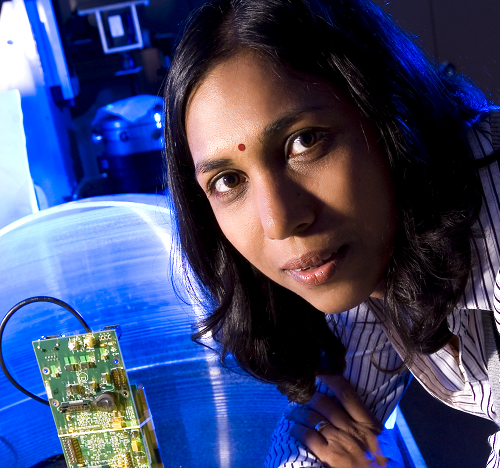 Meena D. Lysko is a Senior Researcher and Research Group Leader with the Optronics Sensor Systems competency area at the CSIR. She holds a PhD in Physics with research expertise in optical radiometry. Her leadership and current work is on optical sensor calibration and validation. Her present activities are in space photonics, with special interest in pre-flight and post-launch calibration of satellite imagers. She is a senior member of the IEEE and also the chairperson of the IEEE joint Aerospace and Geoscience and Remote Sensing Society for the South Africa Section. As chairperson, she has hosted distinguished lectures such as the lecture by Dr Chasteen on “Missile Defence and Early Warning Radars”.
 Herman le Roux has been with the CSIR since April 1998 and is at present the Research Group Leader of the Mathematical and Computational Modelling Research Group. He is involved in modelling and simulation-based acquisition decision support, specifically for the South African National Defence Force. Interests include enterprise information systems, information fusion, biometrics, artificial intelligence and software engineering. Le Roux completed a Masters Degree in Computer Engineering at the University of Pretoria in 1999.
 Lt Col D. Liebenberg is a landward technology analyst with Chief of the South African Defence Force Staff. He obtained a BA Communication degree in 1978 at the Rand Afrikaans University and in 1990 completed his Senior Command and Staff Duties Course at the SA Army College. During his career he worked as security analyst on various African States and has focused on landward technology since 2008. He has a broad general knowledge on the various weapon systems present on the African continent and also visits international weapon exhibitions to determine new trends and developments in worldwide military hardware and systems.

Gavan Lintern has a Ph.D. in Engineering Psychology (University of Illinois, 1978). His recent research employed Cognitive Work Analysis to identify cognitive requirements for complex military platforms. Gavan retired in 2009. He now works occasionally as an industry consultant and runs workshops in Cognitive Systems Engineering. He published a book, The Foundations and Pragmatics of Cognitive Work Analysis in 2009. Contact Gavan at glintern@CognitiveSystemsDesign.net or visit his website, www.cognitivesystemsdesign.net
Steve Matthews is currently employed as a Systems Engineer: Infantry Weapons at Denel Land Systems situated in Centurion. He holds a Diploma in Mechanical Engineering, and started his career as a small arms designer in 1982, at Lyttelton Engineering Works (LIW). Steve was the co-designer of the GA35, 35mm rapid fire automatic cannon, currently used in anti-air applications. He was also the system designer for the eGLAS 35mm anti-aircraft system, as well as the Dual-Purpose (DPG) 35mm anti-missile gun system, currently deployed on the SA Navy patrol vessels. Steve has participated in many armour combat turret system developments, focusing mainly on main weapon system- and ammunition handling system design.
Darin Michael is a Systems Engineer in the Integrative Systems Group (ISG) of CSIR Defence, Peace, Safety and Security (DPSS). This group is responsible for systems innovation across competence areas within DPSS and across units in the CSIR. Darin joined DPSS from the Pebble Bed Modular Reactor (Pty) Ltd. where he held the position of Systems Engineer, Plant Functions (October 2006 to November 2010). He was responsible for the functional analysis of the high temperature gas cooled nuclear reactor being development by the company. Prior to this Darin worked for Denel Land Systems (May 1995 to September 2006) as Systems Engineer, Infantry Systems and as Main Weapon Designer. He was technical lead during the proposal phase for the New Generation Infantry Fighting Vehicle for the SA Army which is currently approaching production. He was also technical lead on the development of the 35mm EMAK cannon. Darin received a BSc in Mechanical Engineering from the University of Natal, Durban in 1994 and is a registered Professional Engineer.
 John Monk has worked for most of his career at the CSIR which he first joined in 1984. He is a Principal Aeronautical Engineer and Research Group Leader in the Aeronautical Competency Area of the CSIR where he currently manages the Modelling and Simulation and Unmanned Aircraft projects. In his time at the CSIR he has been directly involved in more than ten unmanned aircraft design projects and two manned aircraft designs including the world’s first all carbon-fibre military trainer aircraft and the CSIR Hummingbird two-seat observation aircraft. John is a Council Member of the Aeronautical Society of South Africa, Program Committee Member of the International Congress of Aeronautical Sciences and chairman of the National Unmanned Aerial Systems Policy Co-ordination Committee – a committee formed to investigate the airworthiness and operational policies required to integrate UAVs into South African civil airspace.
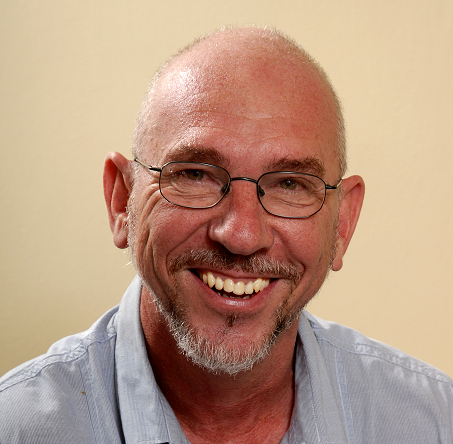 Frikkie Mostert obtained his PhD in Atomic Physics at the University of Stellenbosch in 1984. He joined Somchem in 1983 as a scientist in the Detonics group of the Rockets and Missile division. He remained with the company, which later became a Division of Denel, for 22 years. During this period he was responsible for theoretical warhead design, terminal ballistics research, development of experimental procedures and simulation of detonic events. He held the position of Chief Scientist and participated in the design of the FT5, ZT3 and Mokopa anti-armour warheads and numerous other products in past or current service with the SANDF. He currently works as principal researcher at Landward Sciences in CSIR Defence, Peace, Safety and Security and specifically in areas such as vehicle protection, explosives and explosive effects, shaped charges, explosively formed projectiles, as well as new developments in detonics and terminal ballistics. Dr Mostert has authored or co-authored more than 40 papers in international journals or conference proceedings. He became the South African Ballistic Society’s first Fellow in 2005. He was co-author of the Griffiths Memorial Award winning paper at the International Ballistics Symposium in Orlando, USA, in 2002 and was a member of the International Ballistics Committee from 2003 to 2010. He became a Fellow of the International Ballistics Society in 2010.
 Jan Roodt is the Director of StoneToStars Limited, a consulting firm in Dunedin, New Zealand that specializes in aspects of complex systems science related to organizational design, decision making and risk management. Jan joined the CSIR in 1986 as a materials scientist postgraduate with an honours degree in Physics. Tasked with development of a novel technique for the production of an infrared (IR) sensitive semiconductor, his successful project culminated in him being awarded an MSc in Physics from the University of the Free State in 1988. Click here to download his full bio.
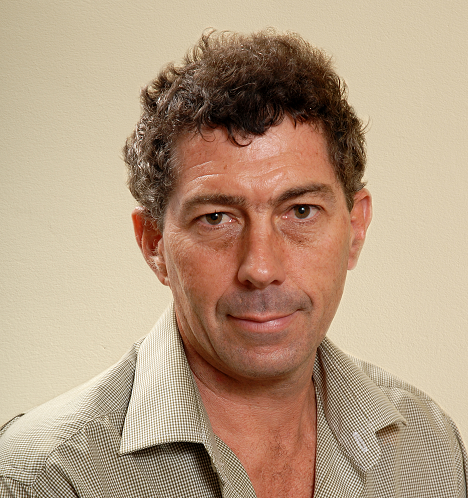 Nick Rubin is a systems engineer with the Integrative Systems Group (ISG) of CSIR Defence, Peace, Safety and Security. The ISG group performs the role of Systems Engineering custodian within DPSS, and provides systems engineering functions in support of CSIR clients and also internally to DPSS projects. Nick holds a graduate degree in electrical engineering, and masters and doctoral degrees for research in the control system area, with associated journal and conference publications. He has career interests in the aerospace, transport and energy sectors and his industry experience includes guidance systems, industrial automation, avionics, and currently unmanned systems and technology for renewable energy.
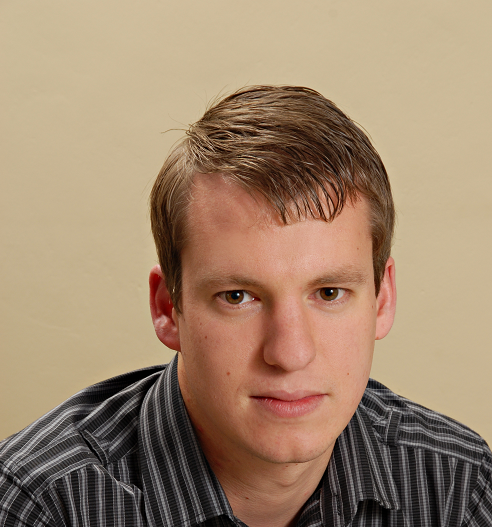 Deon Sabatta received his BSc in Electronic Engineering and BSc Hons. in Applied Mathematics from the Rand Afrikaans University in 2004 and his MSc in Electronic Engineering from the University of Johannesburg in 2007. He is currently studying towards a PhD in Robotics from the Swiss Federal Institute of Technology (ETH) in Zurich. Deon has been with the Mobile Intelligent and Autonomous Systems (MIAS) Emerging Research Area of the CSIR since 2007 where he is currently a researcher and project manager for the outdoor ground-based robotics projects. His interests are in the application of vision-based technologies for autonomous robot tasks such as mapping, localisation and navigation in unstructured environments.
 Captain JE Sinovich is a Combat Officer in the South African Navy, presently serving as SSO Maritime Capability at the Joint Operations Division. Click here to download his full bio.
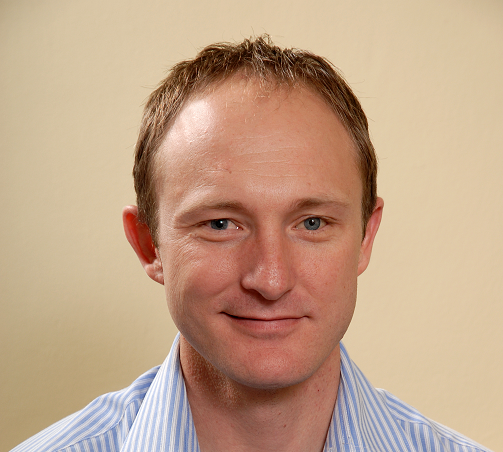 Corné Smith is a Principal Systems Engineer at the CSIR and holds Master degrees in Electronic Engineering and Business Administration. He is registered as professional engineer with the Engineering Council of South Africa and registered as Charted Engineer with the Engineering Council of the United Kingdom. Has over 10 years’ experience as a permanent force systems engineering in the South African Air Force. He currently works on System of Systems engineering and interoperability development of tactical/platform level systems at the SANDF Interoperability Development Environment which is hosted at the CSIR.
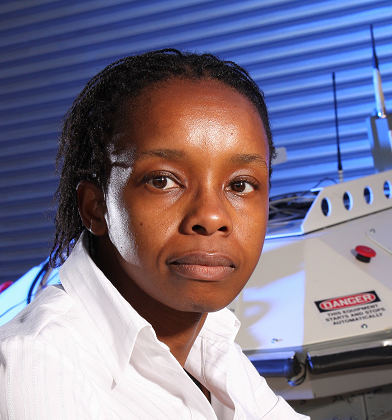 Simukai Utete is a Principal Researcher and Research Leader of the Mobile Intelligent Autonomous Systems (MIAS) group within the Modelling and Digital Science unit at the CSIR. The MIAS group carries out field robotics research. Dr Utete is an electrical engineer and holds a DPhil in Robotics from the Department of Engineering Science at the University of Oxford. Dr Utete’s research interests include mobile robotics, data fusion and condition monitoring. She was employed in the Department of Engineering Science at Oxford for a number of years and worked with colleagues at Oxford, Rolls-Royce plc and Oxford BioSignals Ltd on systems for monitoring aircraft engines. She is a co-inventor, with Oxford and Rolls-Royce colleagues, of a patent on monitoring the health of power plants. Dr Utete is currently a Visiting Professor of the Department of Electrical and Electronic Engineering Science at the University of Johannesburg.
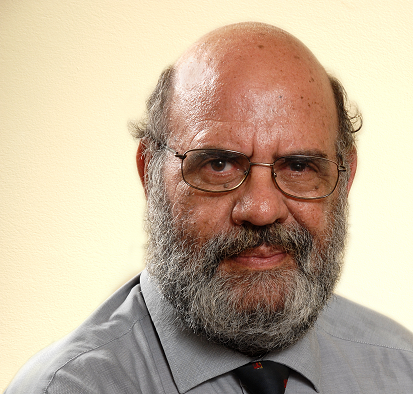 Theo van Dyk holds a B.Sc Eng (Chemical; 1976) and System Engineering (1981), both from University of Pretoria. He works as Senior Researcher at the Landwards Sciences group at CSIR Defence, Peace, Safety and Security, specifically in the domains of mine and counter mine warfare, demolitions and explosive events. He has served as technical advisor on workshops for the Geneva International Centre for Humanitarian Demining (GICHD) regarding protection of vehicles and personnel against landmines, detection of landmines and explosives, and use of dogs as detection. He is also the founding member of the National Institute for Explosive Technology (NIXT).Theo started his career at the Uranium Enrichment Corporation of South Africa (UCOR) in 1977 as an engineer-in-training in process design. He then worked at the CSIR for a decade on research into surface and underwater mine and counter mine warfare, demolitions, etc. When he joined Mechem (DENEL) in 1989 he continued work in mine and counter mine warfare research and was Operations Manager for mine clearing from 1993 to 2000. He has conducted mine clearing operations in Angola, Mozambique, Uganda, Balkans, Cambodia and Iraq.
 Dr. Gerrit Viljoen has worked at Denel Dynamics (previously Kentron) over the last 35 years where he has gained experience in the fields of modelling, control systems, guidance systems, operational research, system engineering and system design on anti-tank, anti-aircraft, air-to-air and air-to-ground missiles and unmanned combat air vehicles. He has also contributed to the Rooivalk attack helicopter’s weapon system and operational research programme. He has obtained his PhD in 2000 from the University of Stellenbosch on remote controlled vision that can be used to control unmanned vehicles and missiles. He has been working as a System Design Specialist since 1996 on a number of new product development programmes, some in conjunction with overseas partners. He is an active member of the International Ballistics Society (IBS) and the International Council for System Engineers (INCOSE). His current research interests are in Systems Design as a speciality area under Systems Engineering as applied to Aerospace systems.
Timothy Wood Senior Scientist at Protechnik Laboratories obtained his BSc in genetics at the University of Pretoria, from there he went on to an honours (genetics) working on vaccine development for Orbiviruses. His Masters degree in human genetics, which is in progress, involves in vitro profiling of two ferrocene-based anti-cancer agents. This study examines the toxicity, the cellular effect (flow cytometry) and the genetic effects of the drugs. At Protechnik Laboratories he works in the biological division in which he develops and tests detection methods for biological agents. Besides this, Timothy is involved in biomedical sample analysis for CW exposure and toxicology studies for HIV/cancer drug development. Specialisation: Chemical weapons exposure biomedical sample analysis, OPCW proficiency test team, HIV/Cancer drug development, genomics, proteomics, toxicology, biological weapons detection and clinical molecular diagnostics.
